

Before you compare wedding venue prices, make sure you’re actually comparing the same things.

There is a moment in almost every wedding venue search when the spreadsheets come out.
You have proposals from three or four venues, a growing collection of PDFs in your inbox and several numbers that seem as though they should be easy to compare. One venue costs this much per person. Another has a rental fee plus catering. Another offers a package. One includes the bar. One doesn’t. One provides tables, chairs and linens. Somewhere along the way, what seemed like simple comparison shopping becomes surprisingly complicated.
And on Long Island, where couples have everything from traditional catering halls and ballrooms to vineyards, waterfront properties, hotels and raw event spaces to choose from, understanding what you’re actually getting for your money matters.
The question isn’t simply, “How much does this wedding venue cost?”
A better question is: “What will it cost to have the wedding we want at this venue?”
Those two numbers aren’t always the same.
Wedding Costs on Long Island: Why the First Number Doesn’t Tell the Whole Story
There is no single reliable number that tells couples exactly what an “average Long Island wedding” costs. Guest count, season, day of the week, location, food and beverage choices and the type of venue all have a significant impact.
There are, however, some useful benchmarks. The Knot’s 2026 Real Weddings Study puts the average cost of a wedding in New York State at $49,000, compared with a national average of approximately $34,000. Those figures cover the ceremony and reception and exclude the engagement ring.
But even an average like that has limited value when you’re planning your own wedding.
A 75-person Friday wedding in February and a 250-person Saturday wedding in October are both Long Island weddings. Their budgets are going to look very different.
That’s why couples shopping for a venue may get more useful information by focusing less on averages and more on what is included in each proposal.
Start With the Venue — Then Look at Everything Around It
Venue and food are typically among the largest wedding expenses, which makes the venue quote a natural place to start your budget.
But a lower venue price doesn’t necessarily mean a lower wedding cost.
Consider a venue that provides the space but requires you to bring in your own caterer, bar service, tables, chairs, linens and other rentals. The initial rental fee may look attractive, but it is only the beginning of the calculation.
Another venue may have a higher initial price but include many of those elements.
Neither approach is inherently better. Some couples love starting with a blank canvas and selecting every individual vendor and detail themselves. Others prefer having more of the planning consolidated.
The important thing is knowing which type of proposal you’re looking at before you compare the numbers.
“Couples naturally look at price when they begin touring venues, but we always encourage them to look closely at what that price actually includes,” says Joan, Sales Manager at Atlantis Banquets & Events. “Sometimes two proposals that look very different at first become much closer once you add in everything you’ll need for the wedding you’re planning.”
What’s Actually Included in Your Wedding Venue Price?
When you receive a wedding proposal, look beyond the total and start breaking it apart.
Does the price include the cocktail hour and reception? What about the open bar? Tables, chairs and linens? Is there a separate ceremony fee? Is staffing included? Are there additional charges for setup or breakdown? Are there minimum guest counts or food and beverage minimums?
Then look outside the reception itself.
Will you need to hire transportation to move guests from the ceremony to the reception? Is there a suitable indoor location for photographs if it rains? Will significant décor be necessary to create the atmosphere you want? Are hotels nearby, and will guests need transportation between the hotel and venue?
Individually, some of these expenses may not seem significant. Collectively, they can change the wedding budget considerably.
Zola’s 2026 wedding cost research estimates that unexpected wedding expenses average more than $3,300. Service charges, gratuities, overtime, rentals, weather contingencies and miscellaneous purchases can all contribute to the difference between the original budget and the final bill.
That doesn’t mean these costs are necessarily “hidden.” Often, they’re simply expenses couples didn’t know to ask about at the beginning.
The Cost of Building the Wedding Around the Venue
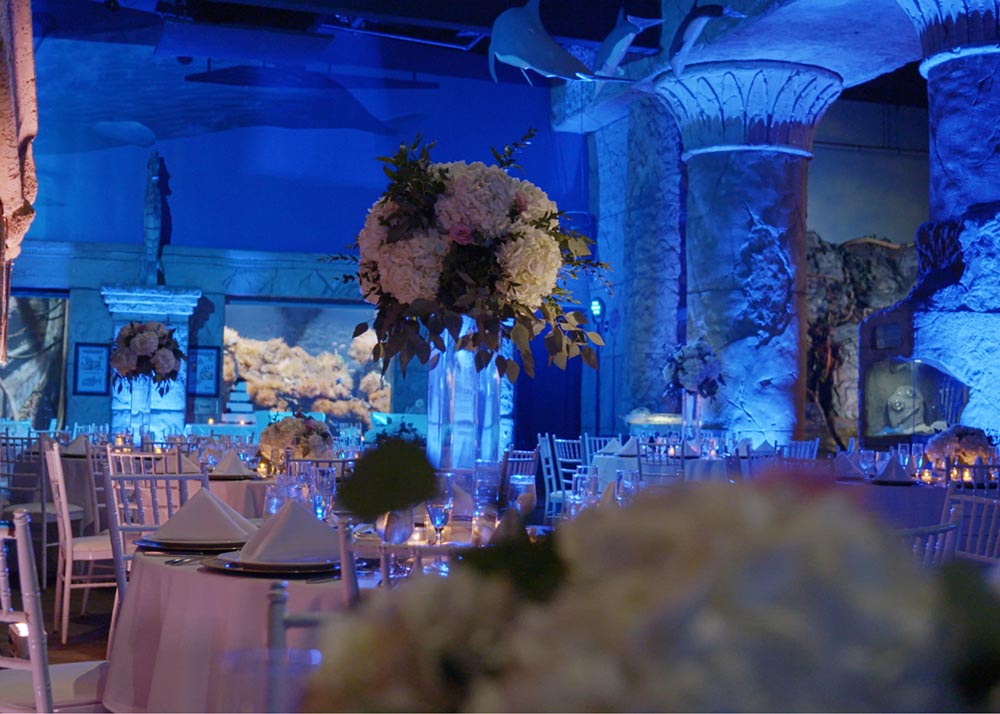
There is another expense that’s harder to spot on a proposal: how much work and money will be required to turn the venue into the setting you want?
A raw or relatively simple event space can be a great choice for a couple with a very specific creative vision. But that flexibility can come with additional requirements.
Lighting, draping, furniture, ceremony structures, specialty rentals, additional florals and décor can quickly become part of the budget.
This is where it helps to evaluate a venue for what it already offers.
Does the room have architectural character? Is there an attractive view? Are there outdoor ceremony options? Are there interesting locations for wedding photographs? Does the cocktail-hour space already feel distinct from the reception room?
Choosing a venue that already fits your style doesn’t mean skipping flowers or décor. It simply means your décor budget can be spent enhancing the space rather than disguising or completely transforming it.
Convenience Has a Dollar Value, Too

Wedding budgets aren’t only affected by what happens inside the reception room.
Logistics can cost money.
If the ceremony and reception take place at different locations, transportation may need to be considered. If the nearest hotel is several miles away, couples may decide to arrange guest shuttles. If the venue has limited photo opportunities, additional travel time may need to be built into the day.
There is also a less tangible cost: time.
Every additional vendor, rental company and location creates another contract, timeline and point of coordination. Some couples enjoy managing those individual pieces. Others would rather simplify the process.
That’s one reason fully curated wedding experiences can be attractive. Instead of sourcing every component separately, couples can work with a venue where more of the wedding is already coordinated.
At Atlantis Banquets & Events in Riverhead, for example, couples can hold their celebration in the Sea Star Ballroom overlooking the Peconic River or choose reception spaces within the Long Island Aquarium. Ceremony, cocktail hour, reception and wedding photography can all take place on the same campus.
Hyatt Place Long Island/East End and The Preston Hotel are also located on property, giving couples the option to keep overnight guests close to the celebration.
Those conveniences aren’t necessarily the deciding factor for every couple. But they should be part of the comparison because they can eliminate expenses — and logistics — that might otherwise need to be added later.
“All-Inclusive” Doesn’t Always Mean the Same Thing
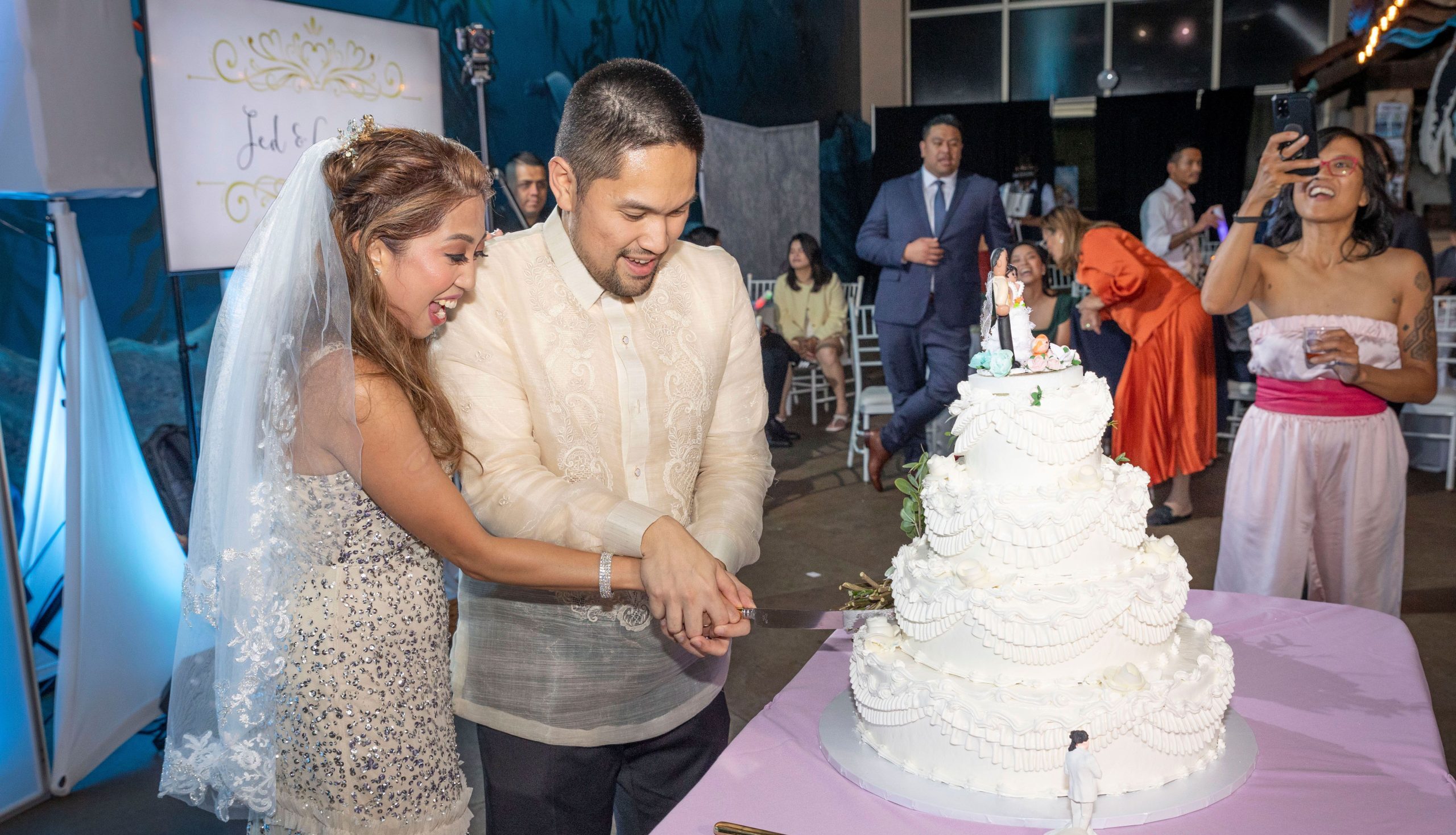
Couples searching online for Long Island wedding venues frequently encounter the term “all-inclusive wedding package.”
It’s a useful search term, but not a universal definition.
One venue’s package may include food and beverage. Another may add entertainment, photography, florals or other services. Some packages may include the ceremony while others price it separately.
Rather than assuming what “all-inclusive” means, ask for an itemized explanation.
At Atlantis Banquets & Events, we prefer to think of it as a fully curated wedding experience. Depending on the package selected, couples can bring multiple elements of the wedding together rather than assembling each service independently.
The benefit isn’t simply having fewer invoices. It gives couples a clearer picture of the cost earlier in the planning process.
Don’t Forget the Two Little Plus Signs
If you’ve started researching Long Island wedding pricing, you’ve probably already encountered something like this:
$XXX per person++
Those two plus signs matter.
They generally indicate that additional charges, such as an administrative or service charge and applicable sales tax, will be added to the listed price. Exactly what those charges cover varies by venue, so this is an area where couples should ask questions rather than make assumptions.
Ask the venue to show you what the estimated total would look like for your anticipated guest count, date and package.
That number is much more useful for budgeting than the advertised starting price.
The same principle applies to upgrades. If you’re considering premium menu selections, specialty cocktails, upgraded décor, additional entertainment or an extended reception, find out what those choices do to the total before committing.
Compare the Wedding You Want — Not Just the Packages
Here’s where wedding venue comparison becomes much easier.
Instead of putting the initial proposals side by side, create the wedding you actually want at each venue.
Let’s say your priorities include an outdoor ceremony, cocktail hour, four-hour reception, open bar, DJ, photography, flowers, hotel accommodations nearby and waterfront wedding photos.
Now determine what it would cost to create that same wedding at each venue.
At Venue A, some of those elements may already be included.
At Venue B, you’ll need to add several outside vendors.
At Venue C, the package may include services you don’t particularly care about but exclude something that’s important to you.
Suddenly, you’re no longer comparing a $15,000 proposal with a $20,000 proposal.
You’re comparing the likely final cost of Wedding A with the likely final cost of Wedding B.
That’s the comparison that matters.
Spend Where Your Priorities Are
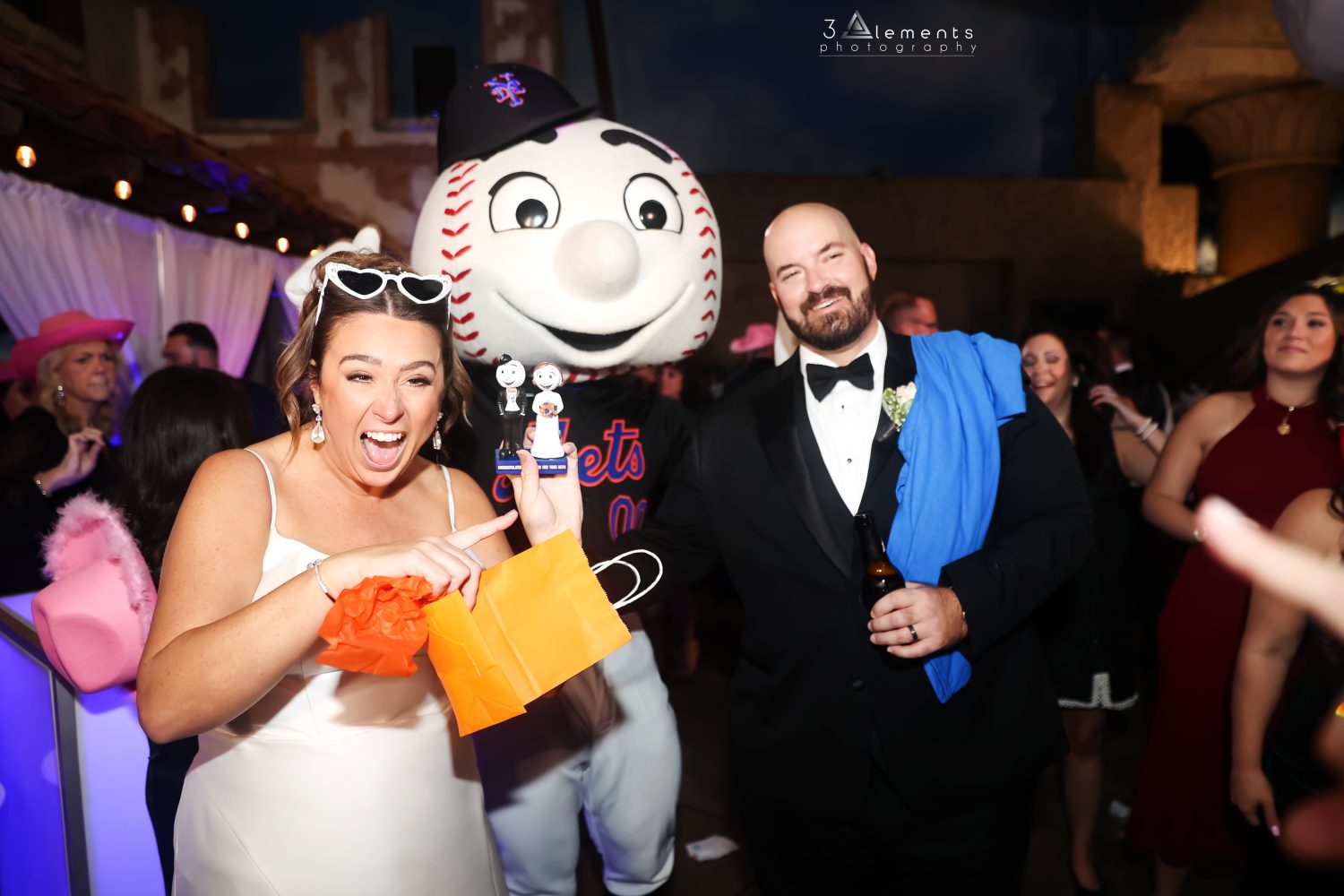
There is no correct amount to spend on a wedding, and there isn’t one wedding package that’s right for every couple.
Some couples want an elaborate floral installation. Others would rather put that money toward food. Some want a live band. Others care much more about photography. One couple may prioritize having everyone stay together for the weekend, while another has mostly local guests and doesn’t need hotel accommodations at all.
Your wedding budget should reflect those priorities.
The trick is making those choices intentionally instead of discovering late in the planning process that a large portion of the budget has been consumed by things you assumed were included.
So when you tour a Long Island wedding venue, don’t be afraid to talk about money. Ask what’s included. Ask what’s optional. Ask what couples commonly add. Ask what isn’t included that you’ll probably need.
A good venue tour isn’t simply about deciding whether you like the room.
It’s about determining whether that venue can create the wedding you want at a cost you understand.
See What Your Wedding Could Look Like at Atlantis Banquets & Events
Whether you’re drawn to a classic reception in the Sea Star Ballroom or a wedding experience that incorporates the Long Island Aquarium, Atlantis Banquets & Events offers couples the ability to create a celebration in one distinctive waterfront location.
Our catering sales team can walk you through available spaces, packages and options based on your guest count, preferred date and wedding priorities — so you can understand what’s included before making your decision.
Ready to start comparing more than just numbers? Schedule a private tour of Atlantis Banquets & Events and discover what your wedding could include.
Let’s get the conversation started, click HERE to request more information
To schedule an appointment with one of our Sales Professionals, please click HERE.